


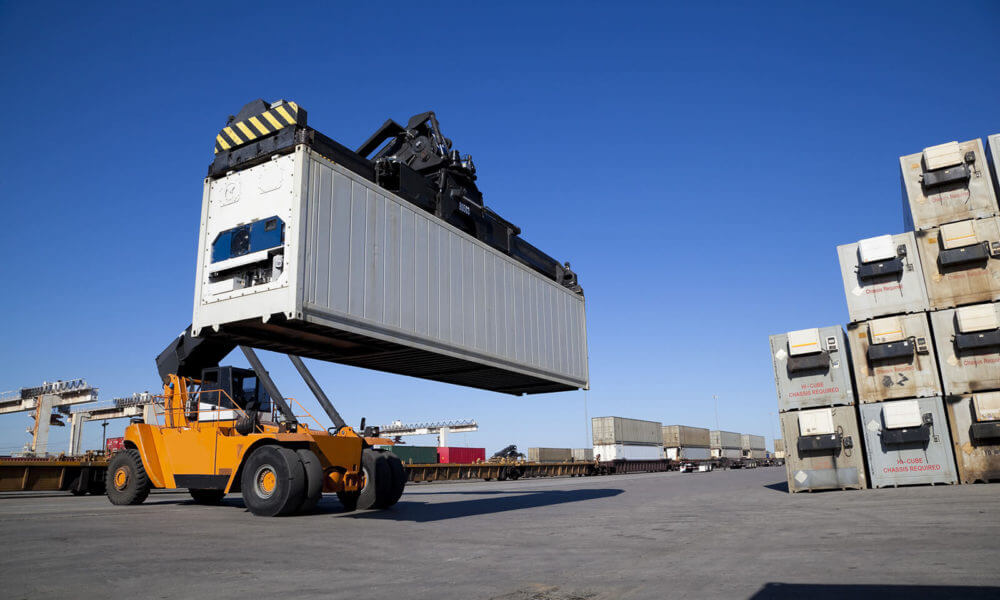
Container chassis are the unsung heroes of the logistics industry. This intermodal equipment serves as the link between ports and warehouses, enabling the seamless and efficient movement of cargo from the ocean to its destination.
Because there are many different types of containers designed for various cargoes, chassis manufacturers created a wide range of intermodal chassis to haul them correctly. Each chassis type has a distinct feature designed for certain container specifications, and it is important to choose the right one to ensure safe transportation and compliance with regulations.
Types of Container Chassis
Chassis types are manufactured to accommodate specific container weight, dimensions, and legal requirements. Below are some of the most common intermodal port chassis:
Tri-Axle Chassis
When cargo weight is a primary factor, the tri-axle chassis is the top choice in providing adequate support necessary to maintain compliance and keep transportation safe.
Equipped with an additional axle, tri-axle chassis are designed to handle significantly higher Gross Vehicle Weight (GVW) limits, allowing easy hauling of dense freight, loads with high tare weights, and heavy export containers. Tri-axle chassis spreads the load weight evenly across the wheels, making them compliant with cargo weight regulations.
When to Use: 20-foot containers weighing over 36,000 lbs. or 40-foot containers weighing over 44,000 lbs.
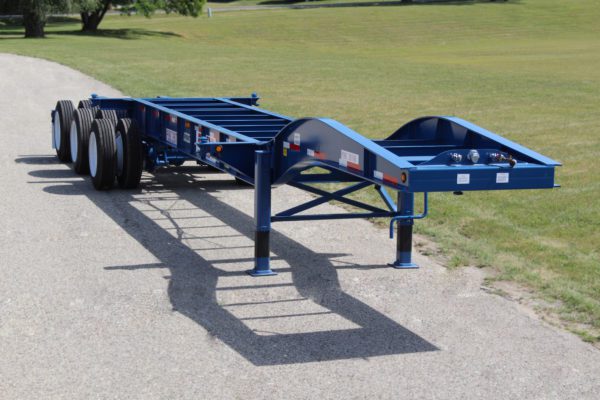
Extendable Chassis
For containers where length must be considered carefully, logistics companies employ the extendable chassis. This specialized type of intermodal equipment features an adjustable frame that can be configured to carry 20-foot, 40-foot, and up to 45-foot containers.
Extendable chassis gives logistics companies unmatched versatility, as it enables teams to transport a broad range of container types without needing another chassis. This flexibility also allows fleet managers to adapt quickly, ensuring a stable and consistent supply of available chassis, shorter wait times, and improved asset utilization.
When to Use: Longer containers measuring 20ft to 40ft and above.
Gooseneck Chassis
While extendable chassis are utilized for longer containers, gooseneck port chassis are specifically designed to haul taller cargo. This type of trailer features a lowered floor area that creates an additional overhead clearance, allowing logistics companies to transport taller cargo, particularly 40-foot high-cube containers.
The gooseneck chassis’ lowered center of gravity improves the stability of taller containers in transit. This makes the transportation of high-cube cargo possible, which is important in an effective fleet strategy.
When to Use: Taller containers that exceed height limitations on standard chassis, as well as ISO tanks and reefer containers.
Unlock Maximum Versatility with a Variety of Chassis from CIE Manufacturing
The supply chain industry is highly regulated, with various rules imposed on container chassis and certain containers that they are allowed to transport. By understanding various container chassis types and where they are utilized, logistics teams can streamline their operations and minimize delays and violations.
If you are interested in expanding your chassis fleet, talk to experts at CIE Manufacturing. As one of the world’s leading manufacturers of intermodal chassis, we offer an extensive selection of high-quality, reliable, and safe chassis types designed for various containers.
Visit https://ciemanufacturing.com/ or contact 877.711.0725 to explore our products today.
