


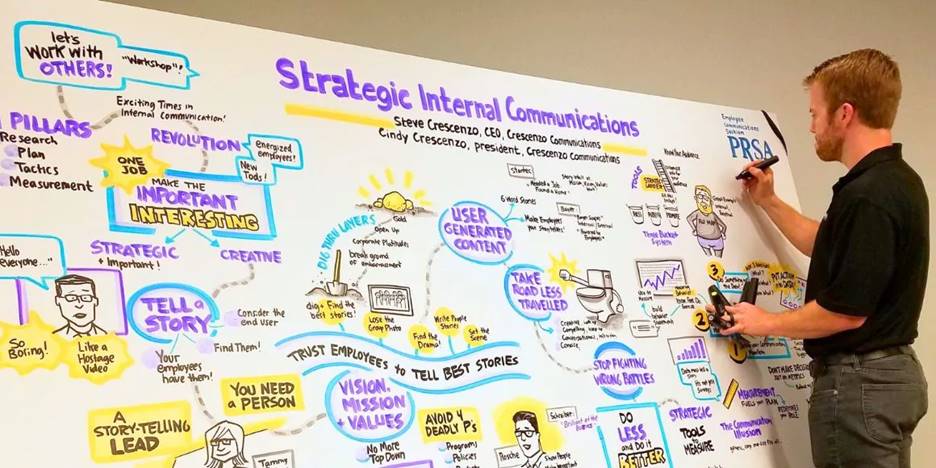
Graphic recording—also known as visual note-taking, sketchnoting, live scribing, or graphic facilitation—is the real-time capture of ideas using a blend of text, illustrations, diagrams, and symbols. A graphic recorder listens, synthesizes information, and translates key insights into a visual summary as the conversation unfolds.
This guide explores the different formats, tools, and setups used in graphic recording, helping you understand how the service works and how it can best support your event or session.
Why Use Graphic Recording?
Graphic recording enhances engagement, strengthens communication, and helps participants retain information more effectively. It can reveal group sentiment, support creative thinking, and make complex discussions easier to digest.
It is widely used in meetings, workshops, conferences, strategy sessions, educational programs, community events, and more. Many industries—from education and government to finance, technology, health, and the nonprofit sector—use visual notes to elevate the participant experience and create high-value takeaway materials.
How Graphic Recording Works
Graphic recorders can work in a variety of formats depending on the event, the space, and the client’s goals. The service can be viewed through several key lenses:
- small or large
- virtual or in-person
- physical or digital
- active or passive
- live or after-the-fact
- audio-based or sticky-note-based
- 2D or 3D
Understanding these options can help you determine the best fit for your event.
Small vs. Large Graphic Recording
Small
Working small is typically referred to as sketchnoting. The recorder uses a sketchbook or tablet while seated with the audience. The benefit is subtlety—participants may not even notice the recorder at work. The drawback is that the visual notes are not visible to others while they’re being created, unless the digital version is projected onto a screen.
Large
Large-scale recording is what most people picture when they think of graphic recording. The visuals are drawn on sizable surfaces such as long rolls of paper, whiteboards, foam boards, or digital screens.
Benefits include:
- participants can watch the visuals evolve in real time
- creates an impressive visual centerpiece
- the canvas can be viewed between sessions
- easy to photograph, share, or display afterward
Virtual vs. In-Person Graphic Recording
Virtual
Remote graphic recording became more common with the rise of virtual meetings. A recorder captures the conversation digitally—often on a tablet—and the visuals can be shared live or afterward. This approach works well for all-virtual or hybrid events. The setup is highly customizable based on the meeting technology, agenda, and event goals.
In-Person
When everyone is physically present, the benefits of graphic recording are amplified. The large canvas becomes part of the room’s energy, drawing people in. Participants can walk up to the artwork, take photos, and engage with the visuals throughout the day. The recorder’s presence adds a dynamic element to the event and can positively influence group engagement.
Physical vs. Digital Graphic Recording
Physical
Working with markers on a large sheet of paper has a unique charm. It feels immediate, tangible, and immersive. Most in-person events use physical canvases because the live creation feels magical—there’s no undo button, just confident visual synthesis happening in real time. Completed canvases can be displayed or taken back to the office as artwork.
Digital
Digital recording is common for virtual events, but it’s also effective for in-person sessions. A recorder may work on a tablet while the artwork is projected onto a screen. Digital formats make it easy to revise content, reorganize information, or collaborate more interactively—particularly during group decision-making processes.
Active vs. Passive Graphic Recording
Active
In an active role, sometimes referred to as graphic facilitation, the recorder interacts with the group—asking questions, clarifying points, and occasionally helping guide the discussion. The canvas becomes a collaborative creation shaped by the group’s input.
Passive
In passive recording, the recorder listens silently and captures the conversation without influencing it. This approach works well for keynote talks, panels, and presentations where the goal is to visually summarize the content as it is delivered.
Live vs. After-the-Fact Graphic Recording
Live
Live recording brings energy and engagement to the room. Watching the artwork unfold helps participants stay focused, and the presence of a visual thinker can elevate the overall atmosphere of the session.
After the Fact
If a live recorder cannot attend or the event has already taken place, visual summaries can be created from audio or video recordings. While the live experience is lost, the final product still provides a high-quality visual overview. Due to the additional preparation and review required, pricing for after-the-fact work may differ.
Audio-Based vs. Sticky-Note-Based Graphic Recording
Audio
Most graphic recording is done by listening—processing spoken content, synthesizing key ideas, and capturing them visually.
Sticky Notes
When multiple conversations happen simultaneously—such as during breakout sessions—it can be difficult for one recorder to capture everything via audio. In these situations, visual notes can be built from participant sticky notes created during group activities.
This method requires careful planning, coordination, and support to organize the large number of notes involved. It can also be done virtually through online collaboration tools.
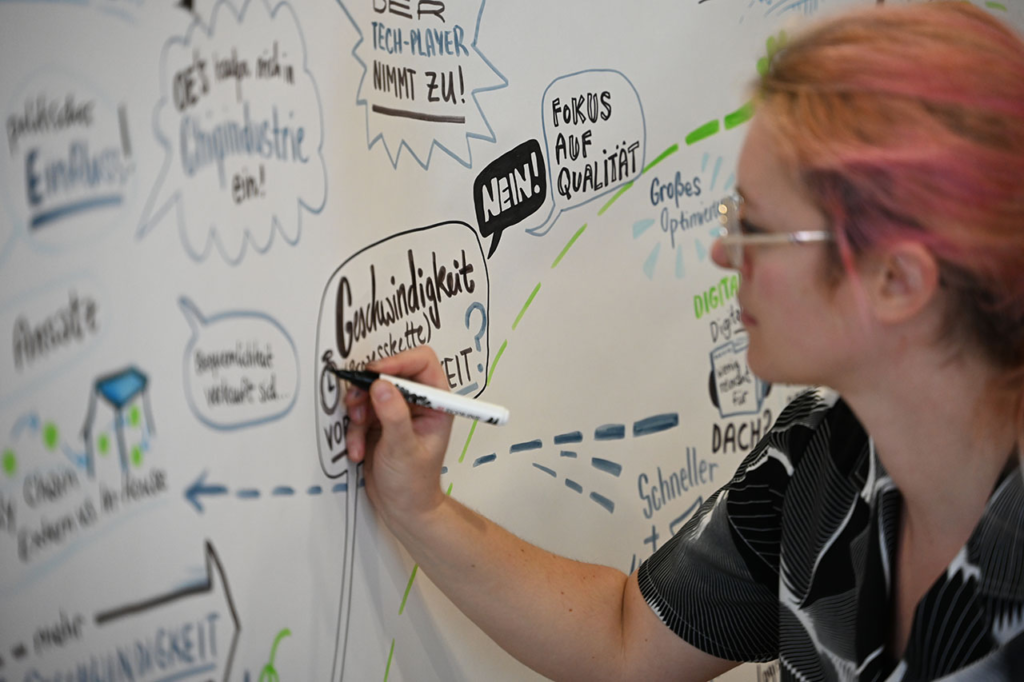
2D vs. 3D Graphic Recording
2D
Most visual recording happens on flat surfaces. It’s easy to display, transport, and photograph, making it ideal for most events.
3D
Advanced setups can involve virtual reality tools that capture ideas in three dimensions. This can be a great fit for highly tech-focused conferences or experiences where thinking spatially adds value. Augmented reality can also be layered onto a 2D canvas for an interactive effect.
Choosing the Right Graphic Recording Approach
With so many options, choosing the right setup can feel overwhelming. Factors such as event format, audience size, room layout, technology, and how you’ll use the canvas afterward will influence the ideal approach.
A simple conversation with a graphic recording professional can help identify the best solution for your goals.
Can You Learn Graphic Recording?
Yes. Many organizations invest in visual-thinking training to empower teams with the skills to communicate and collaborate more creatively. Courses often introduce drawing basics, visual frameworks, listening techniques, and layout strategies. Teams that adopt visual thinking frequently report stronger collaboration and clearer communication.
Why Work With Professional Graphic Recorders?
Professional graphic recorders bring expertise in simplifying complex ideas, synthesizing content quickly, and creating visually compelling summaries that enhance events. Experienced practitioners have worked across industries, offered training in multiple countries, and contributed to the growth of visual thinking as an organizational skill.
Working with a skilled visual practitioner ensures your event is captured clearly, creatively, and in a way that delivers lasting value.
